
When you're sitting for your Basic Theory Test (BTT) or Final Theory Test (FTT) in Singapore, your eyes naturally gravitate toward the text of the question. However, if you want to increase your pass rate and avoid "trick" questions, you should reverse your habit: Read the road sign image before you read the question.
In this guide, we'll explain why this visual-first strategy is the secret weapon of successful learners.
Why the Image is Your Primary Source of Truth
The Singapore Traffic Police (TP) tests are designed to simulate real-world driving. On the road, you see a sign first, then you decide how to act. The theory test mirrors this.
Often, the question text contains "distractor" information: scenarios about what a driver wants to do or where they hope to go. But the road sign in the image represents the absolute legal reality of the situation.
The Pro Strategy
Before reading a single word of the question, look at the sign. Ask yourself: "What is this sign forcing or warning me about?" Once you have the answer, the question text becomes much easier to navigate.
1. Mandatory vs. Prohibitory Signs
One of the most common mistakes is confusing what you must do with what you cannot do.
Mandatory Signs (Blue Circles)
These signs give you a positive instruction. You must follow the direction shown.
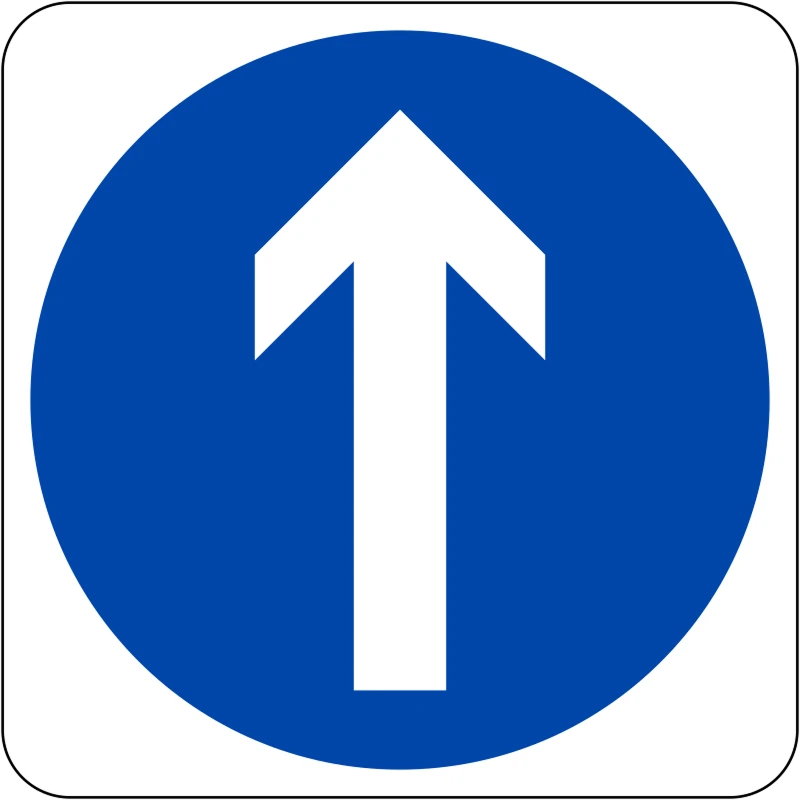
Scenario: The question might say, "The driver wants to turn right into the side road to save time. Is this allowed?" The Trap: You might start thinking about the side road or the time saved. The Truth: If the "Ahead Only" sign is present, the answer is a simple "No." The sign has already made the decision for you.
2. Warning Signs as Immediate Action Triggers
Warning signs (Triangles) tell you about a hazard ahead. In the FTT and RTT, the correct answer almost always involves reducing speed or increasing awareness.
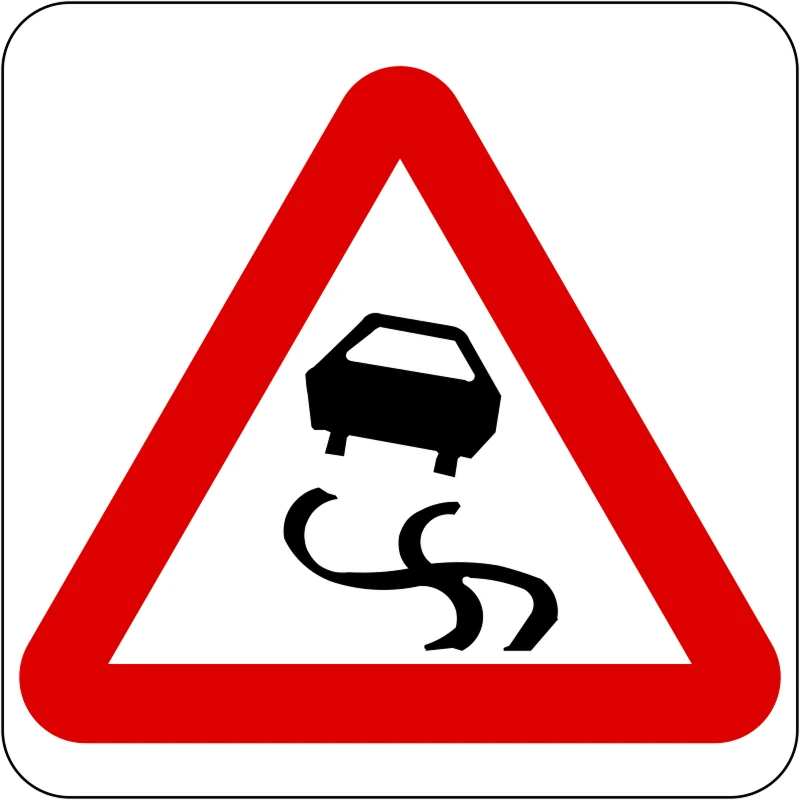
If you see a "Slippery Road" or "Road Narrows" sign in the image, you already know the answer will likely involve:
- Slowing down.
- Avoiding sudden braking.
- Keeping a larger following distance.
By identifying the sign first, you can often predict the correct answer before even reading the options.
3. Road Markings: The "Signs" on the Floor
Don't forget that road markings are signs too. A "Yellow Box" or "Zig-Zag Lines" at a pedestrian crossing are frequently tested.
Example: You see a car stopped inside a yellow box junction. The question asks if the driver is right. If you see the yellow box first, you don't even need to read the excuses in the question (e.g., "The traffic light was green"). The rule is absolute: Do not enter unless your exit is clear.
Watch Out for Zig-Zags
Zig-zag lines near a pedestrian crossing mean No Overtaking and No Parking. If the image shows these lines, that is the primary rule you must apply, regardless of other traffic conditions.
How to Practice This Habit
Next time you use our theory test simulator, try this 3-step routine:
- Cover the text: Look only at the image for 3 seconds.
- Identify the sign/marking: Say its name and its primary rule in your head.
- Read and Confirm: Now read the question. You'll find that the "tricky" wording no longer confuses you because you already know the core rule of the scenario.
Conclusion
Road signs are the "language" of the road. By learning to "read" the visuals before the text, you align your brain with the way the Traffic Police expect you to think. It reduces cognitive load, minimises the impact of confusing wording, and builds the habits you'll need for safe driving in Singapore.
Ready to put this strategy to the test? Start a mock BTT or FTT session now and see how much faster you can identify the correct answers!